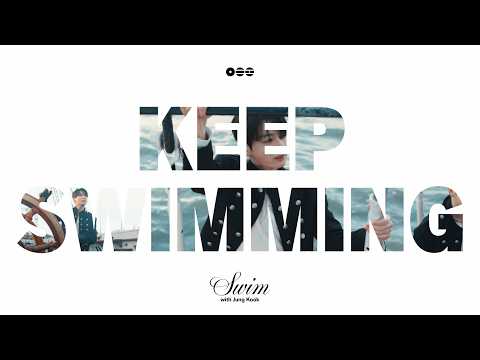
The Surrendering Depths: Jung Kook's Aquatic Meditation on Escape
At its essence, this acoustic lofi reimagining of Jung Kook's work functions as a manifesto of voluntary surrender—a deliberate choice to submerge oneself beneath the chaos of contemporary existence. The artist communicates a profound desire not merely to escape, but to find solace in total immersion, both literal and metaphorical. The repetitive invocation to swim becomes less about physical movement and more about psychological survival, presenting water as both sanctuary and lover. What Jung Kook articulates here is the millennial and Gen-Z frustration with a world that demands constant performance while offering diminishing rewards—a "mad world" where even goodness feels performative and breathing requires a map.
The emotional landscape of this piece oscillates between anxiety and tranquility, creating a hypnotic push-pull that mirrors the ocean's own rhythm. There's desperation beneath the surface—the frantic search for breathable space, the disorientation of feeling lost in depths while simultaneously seeking them. Yet this anxiety transforms into something approaching religious ecstasy when the speaker commits to the dive. The lofi treatment amplifies this duality perfectly; the stripped-down acoustic elements create intimacy while the genre's characteristic haziness suggests dissociation. It's the sound of someone choosing beautiful numbness over painful clarity, and the resonance lies in how familiar that bargain feels to contemporary listeners drowning in information overload and perpetual crisis.
Jung Kook employs water as a multivalent symbol that works on several registers simultaneously. The aquatic imagery functions as romantic metaphor, spiritual cleansing, and psychological escape hatch all at once. The references to sharks and deep water acknowledge genuine danger while refusing to retreat from it—a recognition that peace sometimes requires risk. The contrast between land and sea becomes a meditation on authenticity versus performance: on land, one must "know how to act" in a "bad world," but underwater, freed from gravity and social expectation, movement becomes natural again. The salt on the tongue—simultaneously the taste of tears, sweat, and ocean—collapses personal grief into something universal and elemental, suggesting that what feels like individual suffering is actually participation in something ancient and shared.
This song taps into the profoundly human need for regression in its most positive sense—a return to the womb-like safety of total submersion where external demands cannot penetrate. In an era defined by surveillance capitalism, climate anxiety, and the exhausting performance of digital identity, the fantasy of a space where "we don't chase the time" and "everything can't be so sad" carries revolutionary implications. The refusal to "get cold feet," to turn one's face from land and responsibilities, speaks to a generation often criticized for opting out, but who might simply be swimming toward different shores. The social critique embedded here is gentle but unmistakable: when the world above water demands you be a "goody-goody" while remaining fundamentally "bad," submersion becomes not escape but survival strategy.
The song resonates because it validates withdrawal without shame, presenting depth-seeking as active choice rather than passive defeat. In Jung Kook's delivery—especially in this intimate acoustic arrangement—there's permission to stop fighting the current, to let obsession with something beautiful (whether person, place, or state of being) provide refuge from relentless noise. The lofi aesthetic attracts listeners who use music as emotional architecture, building temporary rooms away from a world that feels increasingly uninhabitable. What makes this particularly powerful is its refusal of resolution; there's no emergence from the water, no lesson learned, no return to "reality." Just the eternal present tense of swimming, watching, diving—a loop that mirrors how we actually cope with overwhelming times, not by solving them but by finding sustainable ways to keep moving through them.