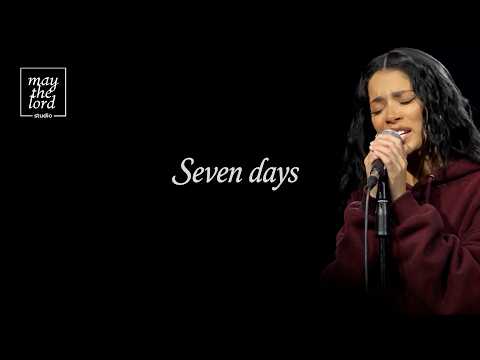
Seven Days: A Confrontation with Convenient Christianity
"Seven Days" by May The Lord Studio arrives as an unflinching indictment of transactional faith, dissecting the modern believer's tendency to demote God from sovereign to service provider. The song's core message is brutally direct: authentic Christianity demands consistent devotion, not crisis management. The artist masterfully exposes the hypocrisy of foxhole faith—that reflexive reaching for divine intervention when personal kingdoms crumble, followed by swift abandonment once stability returns. This isn't gentle encouragement but prophetic confrontation, challenging listeners to examine whether their spirituality is genuine surrender or merely convenient insurance. The refrain structuring devotion across every day of the week becomes both litmus test and corrective, insisting that genuine lordship cannot be compartmentalized or summoned only during emergencies.
The dominant emotion oscillating throughout this piece is convicted urgency—a discomfort deliberately engineered to provoke self-examination. There's an almost prosecutorial tone in lines contrasting what people want versus what discipleship actually requires, creating cognitive dissonance in anyone who has weaponized prayer without practicing obedience. Yet beneath the confrontation lies compassion; the repetition of daily commitment functions as invitation rather than condemnation alone. The song captures that specific shame of recognizing yourself in an accusation, that squirming awareness when spiritual self-deception gets named aloud. The week-long structure provides rhythm to the conviction, suggesting that transformation isn't a Sunday experience but a Monday-through-Saturday discipline.
The artist deploys powerful contrasts and paradoxes as primary literary devices—"cure not King," "rescue without surrender," "convenience dressed in prayer"—each pairing exposing the internal contradictions of selective faith. The throne imagery recurs strategically, positioning human sovereignty against divine authority in a zero-sum competition. Biblical reference to Matthew 6:33 grounds the critique in scriptural authority, transforming personal observation into theological argument. The metaphor of God wanting to "come in" when doors get shut captures the tragedy of spiritual gatekeeping, where believers control access to their own hearts. Perhaps most striking is the personification of consequences, grace, and holiness as visitors at the door—some welcomed enthusiastically, others awkwardly refused—illustrating how people curate their relationship with God's attributes.
This song taps into the universal human struggle between autonomy and submission, control and trust, present across religious and secular contexts. Anyone who has sought help only when desperate, then resumed independence once rescued, will recognize this pattern. It speaks to our cultural moment's obsession with customization—the consumer mentality that has infiltrated even sacred spaces, where we expect to assemble personalized belief systems that affirm without challenging. The critique of performative devotion resonates beyond Christianity, addressing how easily ritual replaces relationship in any tradition. The daily structure also confronts modern fragmentation, our tendency to compartmentalize identity rather than integrate it, maintaining separate selves for different contexts rather than coherent wholeness.
"Seven Days" resonates because it articulates what many suspect but hesitate to confront: that much contemporary spirituality functions as emotional management rather than transformation. In an era saturated with therapeutic religion promising comfort without cost, this song's demand for comprehensive lordship feels simultaneously offensive and refreshing. It validates the nagging sense that Instagram-caption faith might be insufficient while providing architectural clarity about what genuine devotion requires. The repetitive structure—seemingly simple—becomes hypnotic and convicting, making evasion difficult. For those exhausted by spiritual performances or frustrated by their own inconsistency, this offers both mirror and map, diagnosis and direction. It resonates because it refuses to let listeners remain comfortable, insisting that the gap between Sunday confession and Monday living represents not inevitable human weakness but choices requiring examination—and ultimately, daily, unglamorous recommitment.