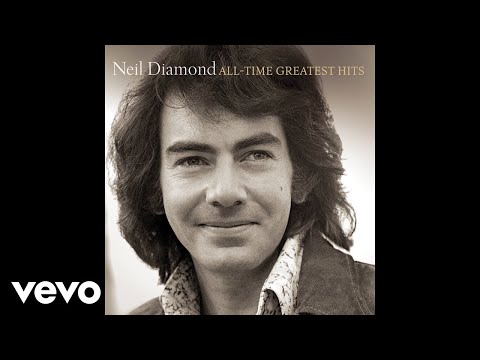
The Immigrant's Anthem: Neil Diamond's "America" as National Mirror
Neil Diamond crafts what amounts to a populist hymn to immigration, capturing the fundamental narrative that has defined American identity for centuries. The song communicates a deceptively simple message: America exists not as a static place but as a destination born from collective yearning. Diamond positions the immigrant experience as the quintessential American story, where the nation itself becomes less a geographical entity and more an aspirational state of mind. What makes this perspective particularly potent is how it reframes patriotism—not as defending what already exists, but as perpetually arriving, perpetually hoping. The artist doesn't dwell on the specifics of any particular immigrant group's struggles; instead, he creates a universalized portrait that speaks to the essential human impulse to seek better circumstances, making the song both historically rooted and timelessly relevant.
The emotional landscape Diamond navigates moves from vulnerability to triumphant determination, creating an arc that mirrors the immigrant journey itself. There's an acknowledgment of hardship in the homelessness and the distance traveled, yet the prevailing emotion is one of irrepressible hope. The song doesn't traffic in sentimentality about suffering; rather, it pulses with forward momentum, an almost defiant optimism that refuses to romanticize the past or dwell on obstacles. This emotional register resonates because it captures something authentic about aspiration—the way hope can coexist with uncertainty, how people can be simultaneously exhausted and energized by possibility. The repetitive, anthem-like quality of the chorus creates an almost physical sensation of waves of arrivals, generation after generation, each carrying that same burning conviction.
Diamond employs elemental imagery and spiritual symbolism to elevate immigration from political issue to mythic quest. The star that guides without providing home suggests both navigational necessity and biblical resonance, invoking exodus narratives that have shaped Western consciousness. The recurring motif of light—particularly freedom's light burning warm—transforms an abstract concept into something tangible and sustaining, almost like a campfire around which the displaced gather. The eye of the storm metaphor is particularly striking, suggesting that immigrants exist in a paradoxical space of both danger and calm, chaos and purpose. By incorporating fragments of patriotic hymns into the song's conclusion, Diamond creates a complex layering where immigrant voices literally sing the nation into being, suggesting that America is continuously authored by those who choose it.
The song connects to universal human experiences that transcend nationality—the yearning for safety, the courage required to abandon familiarity, the faith that somewhere else holds better possibilities. Yet it also engages directly with specific American mythology, the exceptionalism narrative that has long positioned the United States as a beacon. Diamond doesn't entirely interrogate this mythology, which some might view as the song's limitation, but he does democratize it, insisting that the dream belongs to those who travel toward it rather than those already comfortably within its borders. This speaks to ongoing tensions about belonging, citizenship, and who gets to claim national identity—questions that remain contentious decades after the song's release. The piece also touches on the often-overlooked spiritual dimension of migration, the way leaving home requires not just physical but existential courage.
The song's enduring resonance lies in its ability to function as both celebration and provocation, depending on the listener's perspective and the political moment. For some, it's a stirring validation of their own family narratives, a recognition that their presence isn't peripheral but central to the national story. For others, particularly in times of anti-immigrant sentiment, it serves as an uncomfortable reminder of inconvenient truths about national origins. Diamond's musical approach—anthemic, singable, building to an almost religious fervor—makes the song feel less like observation and more like participation, inviting listeners into a collective experience. Its power ultimately derives from holding in tension two ideas: the specificity of immigrant struggle and the universality of human hope, creating a work that feels simultaneously like a document of particular historical movements and a timeless meditation on what it means to believe in a place you've never seen.