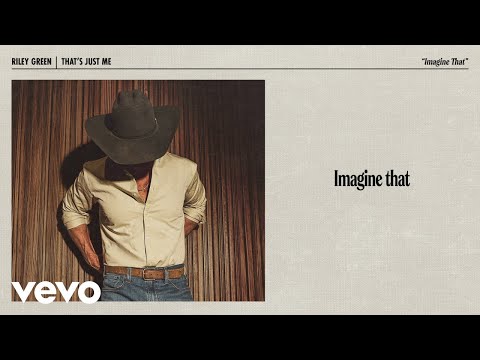
The Desperate Romanticism of Riley Green's "Imagine That"
Riley Green's "Imagine That" operates as a calculated emotional gambit—a late-night phone call transformed into song, where a regretful lover attempts to paint a vivid picture of reconciliation before his ex-partner can hang up. The core message revolves around the power of visualization as persuasion, with the narrator essentially asking his former love to suspend her likely anger and disappointment long enough to envision him waiting outside, bathed in moonlight and contrition. There's an underlying acknowledgment here that words alone won't cut it; he needs her to see the scene, to imagine the romantic gesture into existence before she can reject it. It's both clever and slightly manipulative—he's essentially narrating a rom-com moment in real-time, hoping she'll cast herself as the lead who walks out that door.
The dominant emotion is desperate longing tinged with masculine vulnerability, a combination that resonates particularly within country music's emotional vocabulary. There's a palpable urgency in the late-night timing and the repeated invocations of imagination, suggesting a man who's finally hit his breaking point after however long he's been "barely gettin' by." The self-deprecation—calling himself a "poor ol' fool"—demonstrates the kind of ego-deflation that signals genuine remorse in country tradition. Yet there's also hope threaded through the desperation, a belief that the right words, the right image, the right moonlit moment might undo whatever damage he's caused. This cocktail of regret, hope, and urgency creates an emotional tension that keeps listeners engaged.
Green employs the central conceit of imagination as both literary device and structural framework, building a hypothetical scenario that becomes more detailed with each chorus. The full moon serves as classic romantic symbolism—illumination in darkness, a witness to late-night confessions—while the four-wheel-drive grounds the romance in rural authenticity. The shift from subjunctive ("imagine") to indicative ("you'll see me") in the bridge is particularly effective, as the narrator's fantasy begins to blur with his stated intention. He's literally standing outside, trying to will his romantic vision into her reality. The repeated phrase "imagine that" functions both as invitation and as an expression of disbelief—can you believe someone would do this for you?
The song taps into the universal experience of wanting a second chance and the specific cultural touchstone of the grand romantic gesture. There's something deeply human about the belief that showing up—physically, emotionally, vulnerably—can heal what's been broken. It also explores the gendered dynamics of reconciliation in traditional relationship frameworks, where the man's role is to pursue and demonstrate worthiness through action and availability. The willingness to drive "a thousand miles or just ride around a while" speaks to flexibility born of desperation, the abandonment of pride that comes when you realize what you've lost. In broader terms, it addresses how we attempt to rewrite our failures, to create new narratives that might override the old ones.
"Imagine That" resonates because it captures that specific blend of hope and foolishness that accompanies late-night decisions made from loneliness and regret. Listeners recognize the moment—whether they've been the caller or the one staring at a ringing phone at midnight. Green's delivery sells the sincerity without overselling the melodrama, keeping the scenario grounded enough to feel authentic rather than purely theatrical. The song succeeds because it doesn't guarantee redemption; it only asks for the chance to try, which feels honest. In an era where communication often happens through screens, there's something almost revolutionary about the promise of physical presence, of being willing to sit in that driveway all night if necessary. It's country music doing what it does best: transforming personal desperation into communal catharsis.